

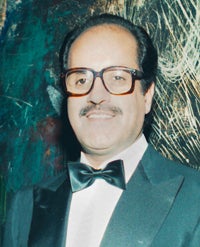
Nasser Al-Rashid
Ph.D., The University of Texas at Austin, 1970
B.S., The University of Texas at Austin, 1965
Nasser Al-Rashid is the founder and chairman of Rashid Engineering, a full-service consulting engineering firm based in Riyadh, Saudi Arabia, which oversees major government construction projects in Saudi Arabia. He is best known as an international philanthropist, providing large gifts for a variety of causes, many of them directly linked to experiences in his own life.
His deep, lasting attachment to UT is reflected in generous gifts to the Cockrell School of Engineering: a chair in civil engineering, a regents chair, a professorship, scholarships and a sponsored laboratory. He also supports numerous programs in psychology, athletics, ophthalmology and engineering at other institutions.
After completing his degree at UT, Rashid taught at King Fahd University of Petroleum and Minerals in Dhahran, Saudi Arabia. In addition to teaching, he oversaw campus construction projects and later served as Dean of Business Affairs and Dean of the College of Engineering. He left the university in 1975 and moved to Riyadh, where he established Rashid Engineering. Since his company’s modest beginning, he has played a key role in Saudi Arabia’s rapid development as an engineering consultant to King Khaled and his successor, King Fahd.
He has designed and managed the construction of the most massive and impressive structures in Saudi Arabia and other countries. By 1980, Rashid Engineering was grossing over $2 billion a year and was the kingdom’s largest engineering firm, designing more than 100 major projects. A respected authority in his field, he has received the Order of the National Legion of Honor, one of the highest honors conferred by the president of France.
He received the Distinguished Graduate award from the College of Engineering in 1980 and was named a distinguished alumnus by The University of Texas at Austin in 1991. He is a life member of the Ex-Students’ Association.

John E. Breen
Ph.D., The University of Texas at Austin, 1962
M.S., University of Missouri, 1957
B.S., Marquette University, 1953
John “Jack” Breen (deceased) was an acclaimed civil engineer and educator who influenced the principal design and construction standards for concrete bridges and buildings nationally and internationally. A member of the National Academy of Engineering, he was the Nasser I. Al-Rashid Chair Emeritus in Civil Engineering at The University of Texas at Austin, where he served as a member of the faculty and was active in the development of new and innovative reinforced and prestressed concrete bridge and building systems.
Breen’s research garnered recognition and awards from organizations such as the American Society of Civil Engineers, the American Concrete Institute, the Prestressed Concrete Institute, the American Segmental Bridge Institute and the International Federation for Prestressed Concrete. He received the 2003 Bridge Engineering Research Award from the Bridge Engineering Association, which cited him for his excellence in structural concrete research, column design, reinforcement development, general structural integrity, segmental bridge design, corrosion protection and bridge aesthetics.
He was a member of the American Society of Civil Engineers’ committee that sets the design loads for buildings. He was also a member and past chair of the American Concrete Institute Building Code Committee for Structural Concrete, which develops the design and construction rules for all concrete buildings in the United States and many foreign countries. A former construction engineering officer in the U.S. Navy and faculty member at the University of Missouri-Rolla, Breen received five university and national awards for his teaching.
In 2003, The University of Texas at Austin Graduate Engineering Council chose him to receive their Faculty Appreciation Award, which recognizes a faculty member who has fostered engineering graduate students’ well-being and professional development.
When receiving this award, Breen commented, “I am aware of the extreme demands made on graduate students and want each one that I come into contact with to know that I respect their opinion and welcome their visiting my office. The students keep me young.”
Ned H. Burns
Ph.D., University of Illinois-Urbana, 1962
M.S., The University of Texas at Austin, 1958
B.S., The University of Texas at Austin, 1954
An expert in prestressed concrete, Ned Burns (deceased), was the first to test the concept of banded tendons, which is now standard industry practice for slab construction. He was inducted into the National Academy of Engineering in 2000 “for contributions to development and education in prestressed concrete, including unbounded tendon building slabs and high-performance concrete bridges.”
An outstanding teacher, administrator and structural engineering researcher, he served UT for nearly 40 years. Burns began his career at The University of Texas at Austin as an assistant professor in 1962. He enjoyed a successful career in teaching and directing Structural Engineering Research until he retired in 2001. He became a professor in 1972 and, in 1983, was named Zarrow Centennial Professor. He was Associate Dean of Academic Affairs for Engineering from 1989-1993. Burns received 11 awards for outstanding teaching and advising at the undergraduate and graduate levels from the department, college and university levels at The University of Texas at Austin. He began prestressed concrete research at UT in 1963 and was the first to test the concept of banded tendons, which is standard industry practice for slab construction.
He served as chairman of the ACI/ASCE Prestressed Concrete Committee and was on the Board of Directors of ACI and PTI. He authored more than 55 technical papers in major structural engineering journals and presented at various conferences throughout the world. His co-authored textbook, “Design of Prestressed Concrete,” with T.Y. Lin, has been the sourcebook in the industry for the analysis and design of prestressed structures for many decades. The ACI awarded him the Joe W. Kelly Award in 1990 in recognition of his contribution to education and the PCI Distinguished Professor Award in 2000.
Burns was a fellow of the ACI, PCI, PTI and ASCE and was named Engineer of the Year by the Travis Chapter of the Texas Society of Professional Engineers in 2000. He was elected to membership in the National Academy of Engineering in recognition of his contribution to education and research in prestressed concrete and high-performance prestressed concrete bridges.
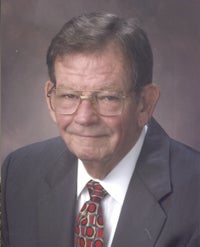
John E. Chance
B.S., The University of Texas at Austin, 1949
John E. Chance is known as a pioneer in the critical areas of offshore positioning and navigation, geophysical surveying and seabed mapping, and geodetic and land surveying. His company was the leader in positioning offshore drilling rigs, production platforms and pipeline lay-barges. The incredibly accurate repository of information on the floor of the Gulf of Mexico that he developed over the years has been of incalculable value to the industry, providing such things as coordinates for moving a rig in deep water, location of subsurface hazards, and precise guidance for placement on-site. Chance’s career began with employment at Sun Oil Company in 1949. He left Sun Oil in 1957 to launch his own company. While his work in the Gulf of Mexico is legendary, John E. Chance and Associates quickly became a global organization. From the Gulf, Chance moved to his first overseas job in Bermuda in 1963 and on to setting survey points in Pakistan, seismic surveys in Portugal, dredging surveys in Brazil, searching the seas around Tahiti, locating the C5A, which crashed offshore of Saigon, Vietnam with over 75 orphans onboard, clearing the Suez Canal, surveying around Bombay, India, and work off the coast of Greece. Chance was also a leader in the use of advanced technology. In 1986, he implemented STARFIX, the world’s first 24-hour commercial satellite-based positioning system. These and other cutting-edge accomplishments made John E. Chance and Associates one of the most trusted survey service providers in the world. In 1995, Chance was awarded the College of Engineering Distinguished Graduates award from UT Austin. His accomplishments earned him the United States Senate Productivity Award for Innovation and the Louisiana Engineering Society James M. Todd Technological Accomplishment medal—both for his development of the STARFIX positioning system.
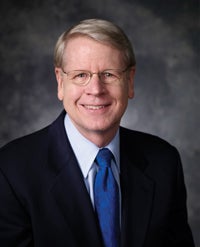
David E. Daniel
Ph.D., The University of Texas at Austin, 1980
M.S., The University of Texas at Austin, 1973
B.S., The University of Texas at Austin, 1972
David E. Daniel is the deputy chancellor of The University of Texas System and a member of the National Academy of Engineers, recognized for leadership in developing the geoenvironmental engineering field. He is internationally known for his major contributions to engineering practice involving landfills and waste containment systems and is widely recognized for his contributions to higher education in Texas.
He earned bachelor’s, master’s and Ph.D. degrees in engineering from The University of Texas at Austin. Between degrees, he worked for three years as an engineer in the San Francisco Bay Area. He served on the faculty at UT Austin in the Department of Civil, Architectural and Environmental Engineering from 1980 to 1996. His administrative career began in 1996, when he moved to the University of Illinois to serve as the first head of the Department of Civil and Environmental Engineering and later as dean of Engineering.
Daniel was appointed president of The University of Texas at Dallas in 2005 and served in that role until 2015. His professional engineering work has been recognized by the American Society of Civil Engineers, which awarded him its highest honor for papers published in its journals, the Norman Medal, and on two separate occasions, its second-highest honor, the Croes Medal. He has also received the President’s Award, the Geotechnical Hero’s Award, and the Outstanding Projects and Leaders Award for Education. From 2005 through 2008, Daniel served as chair of the External Review Panel of the American Society of Civil Engineers, which examined the facts surrounding the performance of New Orleans’ levees during Hurricane Katrina.
In 2009, Daniel served as president of The Academy of Medicine, Engineering, and Science of Texas (TAMEST), which is comprised of all Texas residents who have won Nobel Prizes or been elected to one of the National Academies. In July 2010, Daniel was appointed by the National Academy of Engineering to a committee that investigated the Deepwater Horizon explosion and oil spill in the Gulf of Mexico. Daniel served on the Board of Directors for Sandia Corporation, which oversees Sandia National Laboratory, from 2008 to 2015.
He serves on the Governing Council of the National Academy of Engineering. Daniel has advocated widely for developing and cultivating world-class research universities. The approach he suggested for creating more top-tier research universities in Texas gained widespread support, leading to major legislation and his being named a finalist for “Texan of the Year” by the Dallas Morning News in December 2009.
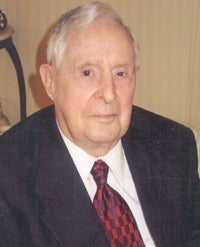
B. Luther DeBerry
B.S., The University of Texas at Austin, 1937
Luther DeBerry was born in Bogota, Texas, on May 7, 1914. He finished high school in Bogota in 1931 and entered The University of Texas at Austin Engineering Department in September 1931. Mr. DeBerry worked part-time while a student at UT Austin and received his B.S. in civil engineering in 1937. He then became employed with the Texas Highway Department in the Paris District, working in various counties in that district until 1942. He took a leave of absence from his job and worked for the U.S. Corp of Engineers for two years, and then served two more years as a deck officer in the U.S. Navy. In 1946, DeBerry returned to the Highway Department as a resident engineer in Rains County, transferring to Hunt County in 1950 as a senior resident engineer. In 1953, he became assistant district engineer in the San Antonio District and was promoted to district engineer in the Lufkin District in 1958. He was appointed district engineer in Dallas in 1960 and then assistant state highway engineer in Austin in 1968. He was promoted to state highway engineer in 1973 and served in this capacity until his retirement in 1980. While employed as a state highway engineer, DeBerry received the American Association of State Highway Officials’ highest awards. He served one term as president of the Western Association of State Highway Officials. He received the Thomas McDonald Memorial Award for outstanding service in highway engineering and also the George Bartlett Award for outstanding contribution to highway progress. After retirement, he worked part-time for HNTB Engineering Consultants from 1981 to 1995. He was inducted into the Texas Transportation Hall of Honor at the Texas Transportation Institute of A&M in 2003.
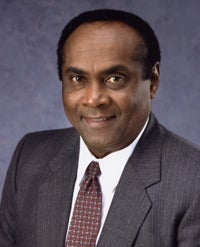
W. Paul Dunn
B.S., The University of Texas at Austin, 1962
Paul Dunn (deceased) was a leader at the interface of aerospace and civil engineering whose technical expertise contributed to the success of the U.S. space program. He led objective technical analyses and assessments for a variety of government, civil and commercial organizations. He worked on a number of space vehicle systems, including medium launch vehicles, the Interim Upper Stage, Centaur, Titan rocket motors, system integration and launch systems analysis. Dunn was among the first wave of black students who integrated into The University of Texas at Austin, earning a B.S. in civil engineering. While at UT, he participated on a medal-winning intramural track team, which set the record for the 880-yard relay and became a charter member of the Alpha Phi Alpha fraternity. He went on to earn a master’s degree in civil engineering from California State University at Los Angeles and an MBA from California State University at Dominguez Hills. After graduation, Dunn’s professional career included employment at Northrop Corporation, TRW Systems Group and Rocketdyne. He was also a part-time Assistant Professor at California State University, Los Angeles. In 1977, he joined The Aerospace Corporation, a federally funded research and development center committed exclusively to the space enterprise. As a technical expert, he held the positions of engineering specialist, senior engineering specialist, and senior project engineer. He was later appointed principal director of the Launch Systems Analysis Directorate, Space Systems Group. Among his many honors is the Distinguished Graduate Award received in 1993 from The University of Texas at Austin, the highest award given by the Cockrell School of Engineering.
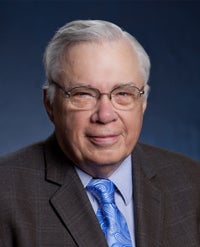
William H. Espey, Jr.
Ph.D., The University of Texas at Austin, 1965
M.S., The University of Texas at Austin, 1963
B.S., The University of Texas at Austin, 1960
William “Bill” Espey came to The University of Texas at Austin on a football scholarship and has had an exemplary 50-year career as a researcher, consultant, educator and mentor in the field of water resources engineering. He has contributed notable advancements in urban watershed analysis, stormwater management and hydraulic modeling.
Espey completed all three civil engineering degrees at UT. As an outgrowth of his Ph.D. dissertation, his urban unit hydrograph methodology has found application in both state and city drainage design manuals and is published in several textbooks, including the “Civil Engineering Reference Manual” for the PE exam. After graduation, Espey started his career with the U.S. Geological Survey Water Resources Division and later joined TRACOR in 1965.
In 1972, he co-founded Espey Huston & Associates Inc. (EH&A) and served as president and chairman of the Board until 1993. EH&A provided engineering and environmental consulting services, employing over one thousand people in several offices in the U.S., England and Mexico. An eminent practitioner, Espey has served on many boards, committees and workgroups to craft policy, implement new laws, develop solutions to complex environmental impacts of public works projects and guide engineering programs at institutions of higher learning. He was also instrumental in founding ASCE’s Environmental and Water Resources Institute (EWRI) and is one of the founding members of the AAWRE.
In 1993, he founded Espey Consultants, Inc., which provides engineering and environmental services and has offices in Austin and Houston. Currently a senior vice president for RPS Espey, which is part of the RPS Group, Espey is a leading technical expert who develops new techniques for analyzing and solving water resources challenges. Espey also taught several courses at UT as a visiting professor and participated in technical seminars for students. In 1986, he was honored as a Distinguished Graduate of the College of Engineering at The University of Texas at Austin.
In addition, Espey has served as the chairman of the Lake Michigan Diversion Committee, which was mandated by the modified Supreme Court Decree of 1980. His work and teaching in the areas of water resources and oceanography demonstrate an overall understanding and high level of expertise in water quality, stream gauging, floodwater, urban runoff, tidal effects, biology in estuarine environs, and freshwater inflow requirements to bay systems. The associated statistical analysis expertise has also been applied to many of these projects, which form the basis for regulatory rule-making.
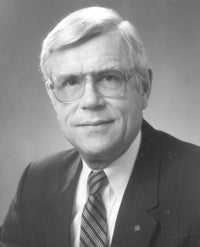
John A. Focht, Jr.
M.S., Harvard University, 1947
B.S., The University of Texas at Austin, 1944
John A. Focht, Jr. received his B.S. in civil engineering from The University of Texas at Austin in 1944; he received his M.S. in civil engineering from Harvard University in 1947. He served in the U.S. Army as a Captain in 1944-1946 and again from 1950-1952. He worked at the U.S. Waterways Experiment Station in Vicksburg, Mississippi, from 1947-1953 and at McClelland Engineering, Inc., from 1953-1991 before retiring as executive vice president and chief engineer. Focht was responsible in part for McClelland’s growth from a small Houston group of about 20 to a multi-national organization of more than 800 employees offering a wide range of geotechnical services to industry and government. He has been a consulting engineer since retiring from McClelland. Focht has received numerous awards, including Distinguished Engineering Graduate from The University of Texas at Austin in 1964. He received national awards from the American Society of Civil Engineers for five of his more than 40 papers, mostly on dams, pile foundations, and offshore structures. He was elected to the National Academy of Engineering in 1986. He was Houston Engineer of the Year and Texas Engineer of the Year in 1987. He served as president of the American Society of Civil Engineers from 1989-1990. Focht was ASCE Terzhagi Lecturer in 1993, a National Honor Member of Chi Epsilon in 2000, an ASCE GeoInstitute “Hero” in 2002, and received the Texas Section, ASCE Lifetime Achievement Award in 2002.
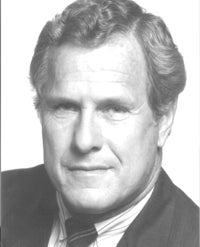
Davis L. Ford
Ph.D., The University of Texas at Austin, 1967
M.S., The University of Texas at Austin, 1965
B.S., Texas A&M University, 1959
Davis L. Ford (deceased) was an environmental engineer with approximately 40 years of experience in the field. He worked with over 150 industries and municipalities and 10 foreign governments in the area of water pollution control, solid waste management, hazardous waste remediation and environmental litigation support.
In addition to his extensive experience as a practitioner, he served on the faculty at The University of Texas at Austin as an adjunct professor for over 30 years, publishing over 100 technical papers, co-authoring or contributing to five textbooks and conducting continuing education courses for practitioners throughout the United States, South America and Europe. He has lectured extensively throughout the United States and many foreign countries. Ford received his B.S. degree in civil engineering from Texas A&M University and his M.S. and Ph.D. degrees in environmental engineering from The University of Texas at Austin.
He was active in various professional organizations, served on the Marine Board of the National Research Council, the USEPA Science Advisory Board, the ABET Engineering Accreditation Commission and chaired the Program Committee for the Water Pollution Control Federation. He was a registered professional engineer in 12 states and a Distinguished Engineering Graduate at both Texas A&M University and The University of Texas at Austin, as well as a Distinguished Alumnus of Texas A&M. He was president and chairman of the Ethics Committee of the American Academy of Environmental Engineers and a member of the National Academy of Engineering. His honorary affiliations include Tau Beta Pi, Sigma Xi and Chi Epsilon.

S.A. Garza
B.S., The University of Texas at Austin, 1955
B.A., The University of Texas at Austin, 1952
Severiano A. Garza (deceased) is recognized for his expertise in water treatment and transmission and for sharing his knowledge with public health agencies in the U.S. and Latin America. He received honors for developing innovative technologies, establishing programs for the transportation of wastewater at the state and national levels and serving the community.
He earned a bachelor’s degree in education in 1952 and one in civil engineering in 1955 from UT Austin. He served as a sanitary engineer with the Texas Health Department from 1953 to 1955, then became a junior design engineer with the City of Austin. He later took a job as director of projects with Isom Hale Associates in 1962, where he stayed a year before founding his own firm S.A. Garza Consulting Engineer. His company S.A. Garza, P.E., is a civil and sanitary engineering firm. It provides engineering services for the treatment, transmission and distribution of water.
In 1956, he became a member of the Texas Society of Professional Engineers and served as the national director for that organization in 1959 and 1960. He was a member and past national director of the Water Environment Federation, and he was chairman of a U.S./Mexico Border Environmental Issues task force from 1995 to 1997. From 1988 until 1995, he served as the southwest director of the Inter-American Society of Sanitary & Environmental Engineers. He was director of the Greater Austin Chamber of Commerce from 1972 to 1974 and is a member of the Mexican-American Chamber of Commerce.
In 1987, he was honored with the President Ronald Reagan Citation for Private Sector Initiatives. In 1993, he was also recognized as an honorary member of the Republic of Mexico Congress of Civil Engineers. From 1978 to 1984, he served on the board of Goodwill Industries. He has served as a trustee at St. Edward’s University from 1981 to 1990. His service to UT Austin includes memberships in the Chancellor’s Council, the Engineering Foundation Advisory Council and the President’s Association. He was also the past president of the Dad’s Association and is a Friend of Alec.
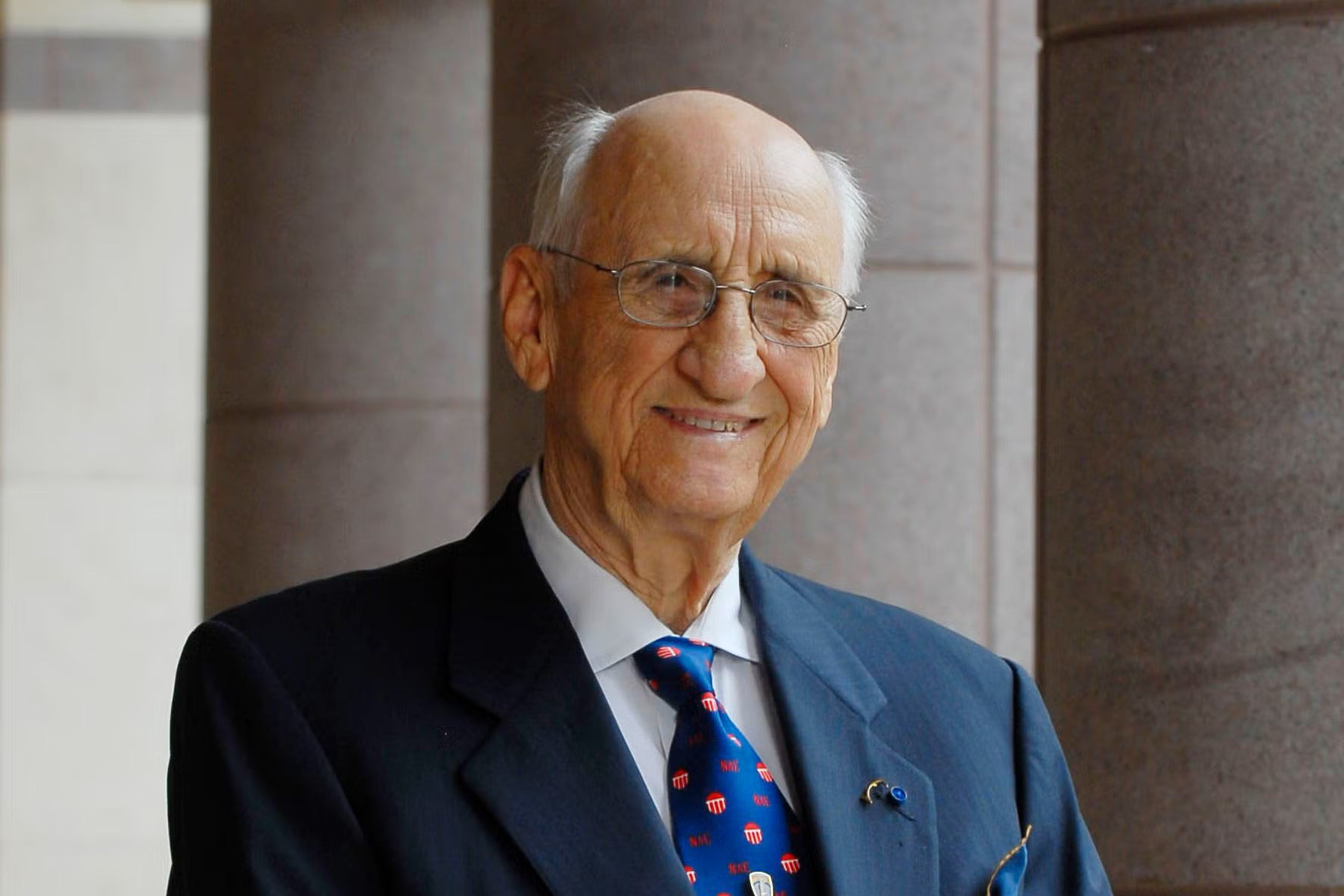
Earnest F. Gloyna
Ph.D., Johns Hopkins University, 1953
M.S., The University of Texas at Austin, 1949
B.S., Texas Technological College, 1946
The teaching, research and professional practice of Earnest F. Gloyna has touched an unusually large number of students, educators, engineers and public leaders. His early interests in water resources and public health have led him to expand his educational base in civil engineering to include an emphasis on environmental engineering and supporting studies in chemical engineering, chemistry, biological sciences and public health.
A member of the National Academy of Engineering, he is recognized for being an outstanding leader in engineering education, vital water resources management and solving society’s environmental problems. His engineering career began in 1942 as an officer in the Corps of Engineers, U.S. Army. This experience was followed by two temporary appointments and 54 years as a faculty member of The University of Texas at Austin. He served as dean of the College of Engineering from 1970-1987. While teaching, developing research programs and participating in academic administration, he has maintained a strong tie to the professional world of engineering. He has supported the concept that an engineering professor teaches best when exposed to real engineering problems and solutions. His research, with the assistance of about 160 postdocs, Ph.D. and Master’s students, has focused primarily on the evaluation and improvement of water quality.
Gloyna is a member of numerous engineering societies and has received honors and awards from both national and international societies. He was elected to the National Academy of Engineering in 1970 and is a Diplomate in the American Academy of Environmental Engineers. He was named a Distinguished Engineering Graduate by the College of Engineering in 1982, received the Joe J. King Professional Award in 1982, and is also a Distinguished Graduate of The Johns Hopkins University in 1993. Gloyna, emeritus professor and Bettie Margaret Smith Chair in Environmental Health Engineering, retired from The University of Texas at Austin in 2001.

Lawrence G. Griffis
M.S., The University of Texas at Austin, 1972
B.S., The University of Texas at Austin, 1970
Lawrence “Larry” Griffis is a nationally award-winning structural engineer with over 40 years of experience contributing structural design to more than 80 major buildings throughout the U.S. and internationally. In 2003, he was elected to the National Academy of Engineering for contributions to the structural design and wind engineering of composite buildings and open, covered, and retractable-roof sports arenas.
His expertise involves the design of long-span roof structures, high-rise buildings, composite steel and concrete systems, and the analysis of large buildings under wind and seismic forces. As one of the premier specialists in wind engineering, Griffis has authored/contributed to the U.S. wind standard building codes. He is also a pioneer in the design of retractable roof stadiums and ballparks. Many projects under his direction have received numerous awards, including the Eminent Conceptor Award for the top engineering accomplishment in Texas.
Griffis has been honored with many distinguished professional awards, including the coveted Kimbrough Award, the highest award presented for design innovation in structural steel, presented by the American Institute of Steel Construction. He was also named a Fellow of the American Concrete Institute and the Structural Engineering Institute. He was inspired by Gustave Eiffel, who financed, designed and constructed the Eiffel Tower, which exceeded the height and grandeur of anything built at the time.
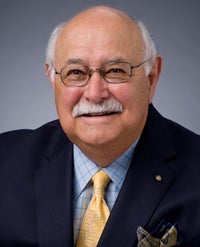
Jose I. Guerra
B.S., The University of Texas at Austin, 1957
Jose I. Guerra was born and raised in Mission, Texas, in the Rio Grande Valley. Mr. Guerra earned a B.S. in architectural engineering at The University of Texas at Austin in 1957 and has had an exemplary career spanning more than 40 years. After founding a successful engineering firm in 1973, he has gained the respect and admiration of fellow engineers and young aspiring graduates in the engineering field.
Long active in professional engineering associations, Guerra has served as president and national director of the Texas Society of Professional Engineers (TSPE) and is presently serving as a trustee of the Texas Engineering Foundation and chairman of the ASCE/NSPE Task Force on the Pan American Union of Engineering Associations of Latin America. He also served as a member and chairman of the Texas Board of Professional Engineers.
His honors and awards include Entrepreneur of the Year, 2003, Hispanic Engineers National Achievement Award Corporation; Distinguished Graduate Award, 2001, The College of Engineering at UT Austin; 2001 CE/ARE Alumni Award, Department of Civil Engineering at UT Austin; Outstanding Businessman, Greater Austin Hispanic Chamber of Commerce; and Engineer of the Year, 1984, Travis Chapter, TSPE, District 587.
Recognized internationally, he was made an honorary member of Colegio de Ingenieros Civiles de Mexico and was appointed as one of six members of the U.S. Council for International Engineering Practice representing United States engineers responsible for implementing the NAFTA Agreement between the United States, Canada and Mexico.
Recognized as a community leader, he has served many professional organizations, rising to positions of leadership in almost every instance. His community service includes being president of the executive board, Capitol Area Council, Boy Scouts of America, Greater Austin Chamber of Commerce, Executive Committee, Leadership Austin and president of Greater Austin Hispanic Chamber of Commerce.
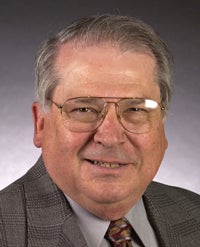
Donald R. Haragan
Ph.D., The University of Texas at Austin, 1969
M.S., Texas A&M University
B.S., The University of Texas at Austin, 1959
Donald Haragan’s combination of broad interests and an engineering education has led to an enormously rich, diverse, and productive career in the academic world. After receiving his B.S. in meteorology through the College of Engineering, quickly followed by an M.S. in meteorology from Texas A&M, he returned to UT Austin, where he spent nine years in several positions: research scientist in the electrical engineering research lab, instructor in the College of Engineering’s atmospheric science group and civil engineering graduate student.
Upon attaining his doctorate, he embarked on a new stage in his career. In 1969, he moved to Lubbock to accept an assistant professor position in the geosciences department of Texas Tech University. For the next three decades, he climbed steadily through the ranks, academically and administratively. Prior to becoming the university’s president, he held the successive posts of professor and chair of geosciences, associate dean and interim dean of the College of Arts and Sciences, vice president for academic affairs and research, and executive vice president and provost. Haragan has served as president of the Southwest and Rocky Mountain division of the American Association for the Advancement of Science, as an academic consultant with the U.S. Information Agency; as chair of the academic affairs committee for the Commission on International Affairs of the National Association of State Universities and Land Grant Colleges; and, in 1988, was one of two U.S. representatives to the International Conference on University Governance in Ankara, Turkey.
He has also served as chairman of the formula advisory committee for the Texas Higher Education Coordinating Board and on a number of advisory councils related to higher education in Texas. In retirement, he continues to serve Texas Tech University in a variety of roles.
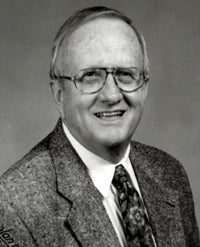
W. Ronald Hudson
Ph.D., The University of Texas at Austin, 1965
M.S., The University of Texas at Austin, 1955
B.S., Texas A&M University, 1954
Ronald Hudson (deceased) made groundbreaking contributions to transportation engineering education and practice. He pioneered the concept of pavement management systems, which introduced a systematic, rational process that emphasizes modern statistical and systems analysis techniques to the management of the highway infrastructure. The concepts have since been generalized and adopted beyond the pavement realm to include the entire system of transportation infrastructure assets.
Hudson maintained a very active role in international technical affairs, having worked in 15 countries, including Peru, Holland, Brazil, Chile, Mexico, China and Nigeria. From 1975-80, he served as international director of a $15 million research program sponsored by the United Nations Development Program and the Brazilian government. He was also the principal investigator of a major study on long-term pavement performance under the Strategic Highway Research Program from 1987-90. He started his research career at the AASHO Road Test in 1958-61.
Hudson received a number of national and international honors in recognition of his contributions, including the ASCE J. James Croes Medal, the Outstanding Paper Award, the Texas Section of the ASCE, the ASTM Kummer Lecture Award, the Outstanding Paper Award of the South African Institution of Civil Engineering and the Outstanding Achievement Award of ASTM.
After receiving his Ph.D. from UT Austin in 1965, Hudson joined the Department of Civil Engineering as an instructor. He retired in 2001 and is the Dewitt C. Greer Centennial Professor Emeritus in Transportation Engineering.
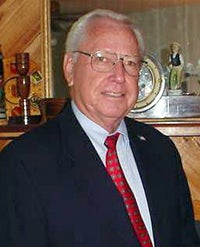
Wayne B. Ingram
Ph.D., The University of Texas at Austin, 1965
M.S., The University of Texas at Austin, 1962
B.S., The University of Texas at Austin, 1961
Since graduation, Wayne B. Ingram has been a practicing engineer in the international offshore oil-field industry, focusing on foundations and soil mechanics. His expertise is in the performance of axial and lateral foundation elements in marine sediments. Ingram spent twelve years as a civil engineer for Shell Oil and Shell Development Companies. Five of those years were as supervisor of civil engineering research for Shell Development Company, including responsibility for foundation, structural, oceanographic and marine environmental research.
Ingram left Shell in 1976 and spent five years with two consulting engineering firms before starting his own company, Seafloor Engineers, Inc., in 1982, offering offshore services to the oil industry worldwide. He sold his company to Fugro-McClelland in 1990 and became president of the Fugro-McClelland Marine Geosciences Company in 1991.
He retired in 1993, formed Ingram Companies in 1994, and is active as an offshore engineering consultant. In 1988, along with his staff, Ingram prepared a comprehensive engineering document summarizing the state-of-the-practice for foundation design in coral, carbonate sediments and chalk. He has developed and presented three multi-day technical schools for various clients.
He was responsible for the foundation investigation for Shell’s first TLP, Auger, in almost 3,000 feet of water in the Gulf of Mexico. Ingram has also authored several papers on the performance of axial and lateral foundation elements in marine sediments, including carbonates and on the stability of jack-up rig foundations in the marine environment.
He is a Fellow of the American Society of Civil Engineers, a Fellow Emeritus in the Marine Technology Society, and presently is a president of the Marine Technology Society. He possesses three patents on offshore soil sampling devices and was selected in 1994 as a Distinguished Engineering Graduate of the University of Texas. He possesses a key to the City of Houston, which was presented by Mayor Jim McConn in 1980.
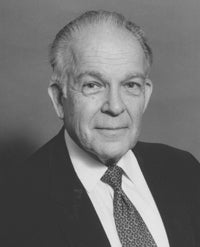
Clyde E. Lee
Ph.D., University of California at Berkeley, 1962
M.S., Mississippi State University, 1956
B.S., Mississippi State University, 1952
Clyde Lee is responsible for growing and developing the transportation engineering program at The University of Texas at Austin into one of the highest-rated programs of its kind in the United States. He was also the first director of the Center for Highway Research, now the Center for Transportation Research.
His research activities include pioneering work in the development and application of highway Weigh-in-Motion (WIM) systems, simulation of traffic control and vehicular flow at intersections, automated traffic data collection and analysis and traffic monitoring for pavement and bridge research.
He began his faculty career at UT Austin in February 1959 as an assistant professor. He advanced to associate professor in August of 1963 and was appointed professor in September 1967. When Lee joined the faculty, only a few transportation engineering courses were offered in the Department of Civil Engineering, and no organized highway research was conducted at UT. Under his leadership, undergraduate and graduate course offerings were expanded, including several graduate courses taught during the evening hours to accommodate full-time engineering employees at the Texas Highway Department, Federal Highway Administration, Bergstrom Air Base and the City of Austin. In 1965, additional faculty members were added.
Following Lee’s initiation and the enactment of enabling legislation, the Center for Highway Research was founded as an administrative unit in the College of Engineering to represent the university’s interests in matters related to highway research. Lee served as the center’s director until 1980, when it became the Center for Transportation Research. The Center’s research opportunities and financial support have contributed significantly to the Department of Civil Engineering.
Lee is the Nasser I. Al-Rashid Centennial Professor Emeritus in Transportation Engineering. As a non-graduate of UT Austin, he is the first honorary member of the Civil, Architectural and Environmental Academy of Distinguished Alumni.
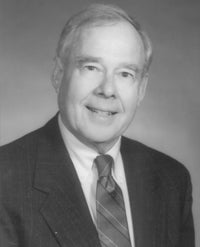
George C. Love
B.S., The University of Texas at Austin, 1951
George C. Love earned his bachelor’s degree in architectural engineering in 1951 from The University of Texas at Austin. The first professional experience he gained was with the U.S. Army Corps of Engineers as an instructor at its engineering school. In 1953, he joined Bovay Engineers as a design engineer, and in 1965, he became vice president. While with Bovay, he was chief engineer for a U.S. Atomic Energy project in Washington and project manager for four Johnson Space Center facilities designed by his company. He joined Limbaugh Engineer Inc. in Albuquerque in 1965 as vice president and chief engineer. At Limbaugh, he was a project engineer on the Very Large Array site selection project for National Radio Astronomy. In 1968, he returned to Bovay Engineers and was project manager for Engineers of the Southwest, preparing the airport master plan for Houston Intercontinental Airport. In 1981, Love became senior vice president and a director of Southwestern Laboratories, Inc. He was the principal in charge of all material testing and inspection services for the construction of Houston’s Transco Tower and the Hardy Street Toll Road. Since 1994, he has been vice president of HBC Engineering Inc. in Houston and is one of the firm’s founding principals. HBC provides professional services in environmental, geotechnical and construction materials engineering. He was selected as the 1997 Engineer of the Year by the Texas Society of Professional Engineers. The Texas Engineering Foundation named him the Distinguished Engineer of the Year in 1995. He was selected as the TSPE Region IV Engineer of the Year in 1997. He was also a national director for the National Society of Professional Engineers from 1993 through 1995. In 1998, he was named a Distinguished Engineering Graduate by the College of Engineering at The University of Texas at Austin.
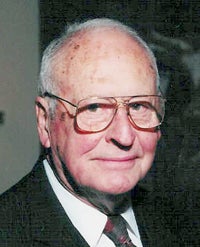
Hudson Matlock
M.S., The University of Texas at Austin, 1950
B.S., The University of Texas at Austin, 1947
Hudson Matlock received his B.S. in civil engineering from The University of Texas at Austin in 1947, followed by his M.S. in 1950. He began his teaching career at UT Austin in 1947 as an instructor and served as chairman of the Department of Civil Engineering from 1972-1976. He retired as a professor in 1976 and is currently professor emeritus in civil engineering. Matlock taught courses in materials, experimental mechanics and soil mechanics; his research and consulting work were primarily applicable to offshore structures and their foundations. After retiring from teaching at UT Austin, Matlock became vice president for research and development at the Earth Technology Corporation in Long Beach, California. He retired from Earth Technology in 1985 and has since been a consulting engineer. Matlock has been involved in numerous engineering societies and activities, including Chi Epsilon and Tau Beta Pi, Fellow 1947-48. He received the Offshore Technology Conference Distinguished Achievement Award for Individuals (with Dr. Lymon Reese) in 1985. He was elected to the National Academy of Engineering in 1982 and was named a Distinguished Engineering Graduate by the College of Engineering, UT Austin, in 1986. He is a Fellow of the American Society of Civil Engineers and a registered professional engineer in Texas. Matlock is the author or co-author of numerous publications dealing with offshore structures and foundations.
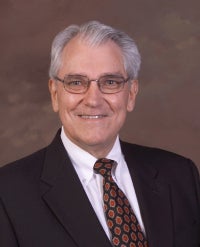
Wilbur L. Meier, Jr.
Ph.D., The University of Texas at Austin, 1967
M.S., The University of Texas at Austin, 1964
B.S., The University of Texas at Austin, 1962
Wilbur L. Meier, Jr., a leader in developing innovative engineering programs, has served as professor of industrial engineering and engineering dean at North Carolina State University, program manager for ABB, Inc., division director at the National Science Foundation, chancellor of the University of Houston System, engineering dean at Penn State University, head of the School of Industrial Engineering at Purdue, chairman of Industrial Engineering at Iowa State, and faculty member at Texas A&M. He has served in leadership positions in engineering societies, including IIE, ASEE, ABET and SME. He has been selected as a Distinguished Engineering Graduate of The University of Texas at Austin, received the 2000 International Education Award by SME, and has received the Bliss Medal from the Society of American Military Engineers. He has been elected a Fellow of the Institute of Industrial Engineers, American Society for Engineering Education, Society of Manufacturing Engineers, American Association for the Advancement of Science and World Academy of Productivity Science. Active in professional practice and investigations, Meier most recently served as a program manager for ABB, Inc., for almost three years while on leave from NC State. He has led lean manufacturing training and applications in ABB and other companies for more than seven years. At ABB and in other companies such as Black & Decker, Nokia, Eaton, Square D and Data General, he has had the opportunity to lead and participate in improving production systems in a variety of industrial settings.
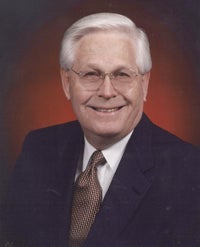
Arnold W. Oliver
B.S., The University of Texas at Austin, 1960
Arnold Oliver’s 33 years of distinguished public service at the Texas Department of Transportation, culminating in four years at the helm as executive director, began with an engineering education at The University of Texas at Austin. Over the years, he became a well-known innovator and leader in the Texas transportation industry. The first in his family to attend college, he enrolled in 1954 possessed of few resources beyond the encouragement of his parents and an intense drive to succeed. Through a combination of part-time night custodial jobs paying 50 cents per hour and, later, the devoted support of his late wife, Sue, he graduated in 1960 with a B.S. in civil engineering. At TxDOT, his first employer out of college, his career unfolded in a steady series of progressively greater responsibilities and achievements. As a senior engineer in Wichita Falls during the mid-1960s, he pioneered computer automation applications, producing the first set of state highway plans created entirely by automation. Ten years later, as resident engineer in Young County, he introduced the first integrated engineering/maintenance operation in the history of an agency that had traditionally maintained separate engineering and maintenance organizations. His innovation subsequently became the model for all districts statewide. Concurrently, he helped TxDOT’s Austin-based central administration develop and implement the comprehensive filing and file retention system that is still in use today. In 1986, he was promoted to district engineer for the Paris district. There, his attention to the dangerously deteriorated condition of the area’s bridges resulted in much-needed funding for bridge replacement. A year and a half later, he was promoted to district engineer for Dallas, where he expedited the long-stalled $500 million Dallas Central Expressway project and oversaw the design and planning of the city’s first high-occupancy vehicle lanes. In 1989, he was named to head the agency he had so long and ably served. He remained in the post—presiding over a 15,000-employee entity with $1 trillion in assets and an annual budget of over $3 billion until his retirement four years later. Oliver launched a second career with HNTB Corporation in 1995. A longtime loyal supporter of the Cockrell School of Engineering, he served on EFAC from 1992-98 and is a Friend of Alec. A ferry boat between Port Aransas and Harbor Island is named after him as well.
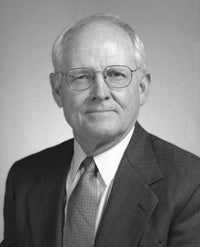
William R. Ratliff
B.S., The University of Texas at Austin, 1960
After graduating from public school in the small West Texas ranching town of Sonora, Texas, Bill Ratliff earned a degree in civil engineering from The University of Texas at Austin. He worked as a civil engineer for 30 years before serving as a member of the Texas State Senate for 15 years. He also served as the 40th lieutenant governor of Texas. Of his legislative service, he says he is most proud of his work on public school finance. He was first elected to the Texas Senate in 1989. During his tenure in the Senate, he served four years as chairman of the Senate Education Committee and four years as chairman of the Senate Finance Committee. During his third legislative session, he completely rewrote Texas’ outdated public education code on his laptop computer. In December 2000, Senator Ratliff was chosen by his colleagues in the Senate to serve as the 41st Lieutenant Governor of Texas, as Lieutenant Governor Perry moved into the Governor’s office vacated by George W. Bush when he became president. Ratliff returned to the Senate when David Dewhurst became lieutenant governor in 2003. He went on to serve as chairman of the Senate State Affairs Committee. Ratliff was also named one of Texas Monthly magazine’s prestigious “Best Legislators” roundup an unprecedented five times. “Bill Ratliff is the gray eminence of the Texas Senate. A calm, ramrod-straight, low-key Southern gentleman affectionately known to his colleagues as Obi-Wan Kenobi, after the wise advisor in Star Wars.” – President George W. Bush Ratliff was he was named a Distinguished Graduate of the UT School of Engineering in 1990. In 2005, Ratliff was awarded the John F. Kennedy Profile in Courage Award for “the example he has set of courage and principle in American life.”
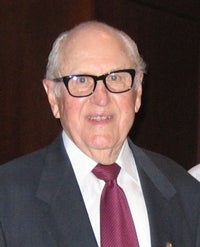
Lymon C. Reese
Ph.D., University of California, Berkeley, 1955
M.S., The University of Texas at Austin, 1950
B.S., The University of Texas at Austin, 1949
Lymon Reese has conducted extensive research in geotechnical engineering, principally concerning the behavior of deep foundations. He has conducted pioneering work in performing field studies with instrumented piles and drilled shafts and developed analytical methods now widely used in the design of deep foundations. He has authored over 400 technical papers and reports and presented numerous invited lectures and talks around the world. Among his publications are two manuals he prepared for the Federal Highway Administration: the “Handbook on Design of Piles and Drilled Shafts Under Lateral Loads” in 1984 and the “Drilled Shafts, Construction Procedures and Design Methods” in 1988. His invited lectures include Keynote lectures at the International Conference on Calcareous Sediments in Perth, Australia, in 1988, the International Geotechnical Seminar on Deep Foundations on Bored and Auger Piles, in Ghent, Belgium, in 1988, and the Second Symposium on Geotechnical Problems in Saudi Arabia at King Saud University in Riyadh in 1989. Reese was elected to the National Academy of Engineering in 1974 and was elected an Honorary Member of ASCE in 1984. From The University of Texas at Austin, he received the Joe J. King Professional Achievement Award in 1977 and was selected as a Distinguished Engineering Graduate in 1984. He was the first person to become an honorary member of the International Association of Foundation Drillers in 1984, and he received the Offshore Technology Conference Distinguished Achievement Award for Individuals in 1985. Reese spent three years on the faculty at Mississippi State University before joining the UT faculty in 1955. He was chairman of the Department of Civil Engineering from 1965 until 1972 and associate dean of the College of Engineering from 1972 to 1979. He continues at UT as the Nasser I. Al Rashid Chair Emeritus and professor of civil engineering and lectures in undergraduate, graduate and seminar courses.
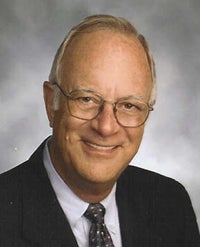
H. Ken Rigsbee, Jr.
B.S., The University of Texas at Austin, 1967
Ken Rigsbee is a fourth-generation Austinite and son of an engineer. A proud UT architectural engineer, he worked at Phillips Petroleum Company for over 35 years, managing natural gas construction projects all over the U.S., and later served on legislative committees of oil and gas associations. Throughout his engineering career, he remained active in state and national civic and professional societies, sharing his technical expertise and leadership skills. Upon earning his B.S. in architectural engineering from UT Austin in 1966, he began his career with Phillips Petroleum Company as a junior design engineer in Bartlesville, Oklahoma. He then worked in Raleigh, North Carolina, and in Kenai, Alaska, as a construction engineer, where he oversaw nearly 30 projects around the plant and state. He later returned to Bartlesville and became active in civic and professional affairs, serving on the local school board and water district and serving as president and chairman of the NSPE Education Foundation.
In 1988, Rigsbee returned to Austin to manage Phillips’ government relations activities in Texas and Louisiana. He later assumed responsibility for several other southern states. He retired from Phillips in 2002 when the company merged with Conoco. While in Oklahoma, he served as president of the Oklahoma Society of Professional Engineers, Bartlesville chapter, president and founder of the Oklahoma Engineering and Technology Guidance Council, and regional chairman of the American Society for Engineering Education. Rigsbee was twice awarded Young Engineer of the Year by the Bartlesville Chapter, OSPE, and by the state organization in 1977. In Texas, Rigsbee served on the department’s Visiting Committee at UT Austin. He was recognized as Texas Engineer of the Year in 1995 and was named a Distinguished Alumnus of the Civil Engineering Department in 2003. He received the Phillips Distinguished Community Service Award from Phillips Petroleum and was named the second national fellow of the National Society of Architectural Engineers. Rigsbee is a licensed professional engineer (structural) in Texas and Oklahoma.
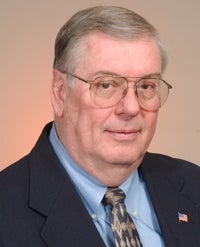
Charles A. Sorber
Ph.D., The University of Texas at Austin, 1971
M.S., Penn State University, 1966
B.S., Penn State University, 1961
Charles Sorber’s (deceased) distinguished career in academia spans three decades. He was a veteran academician and administrator who successfully served as the chief administrative officer of three University of Texas System academic institutions. His research in environmental and water resources engineering was also widely recognized. He began his professional career with the U.S. Army, serving in a number of positions in Europe with the U.S. Army Medical Research and Development Command. His service earned him the Meritorious Service Medal with two Oak Leaf Clusters as well as other honors.
He joined the UT System in 1975 and served in various academic, research and administrative positions at UT San Antonio. He was associate dean of the College of Engineering at UT Austin from 1980 to 1986, when he was appointed dean of engineering at the University of Pittsburgh. He returned to the UT System in 1993 when he was appointed president of UT Permian Basin, serving as the fourth president of the institution from 1992 to 2001. He also served as interim president of the University of Texas at Arlington from 2003 to 2004. In 2009, he was asked to come out of retirement to serve as interim president of the University of Texas-Pan American. Sorber authored or co-authored more than 130 papers and reports in the areas of land application of wastewater and sludge, water and wastewater reuse, water and wastewater disinfection and higher education. He was a member of several honorary societies and received a number of awards for his teaching and professional service, including the Gordon Maskew Fair Award of the American Academy of Environmental Engineers and the Orchard Medal of the Water Environment Federation. In addition, he was named Outstanding Engineering Alumnus of The Pennsylvania State University and was named a Fellow of the American Society of Civil Engineers, and served as president of the Water Environmental Federation during 1992-93. He was recognized as a Distinguished Engineering Graduate of the Cockrell School of Engineering. Dr. Sorber passed away in October 2013.
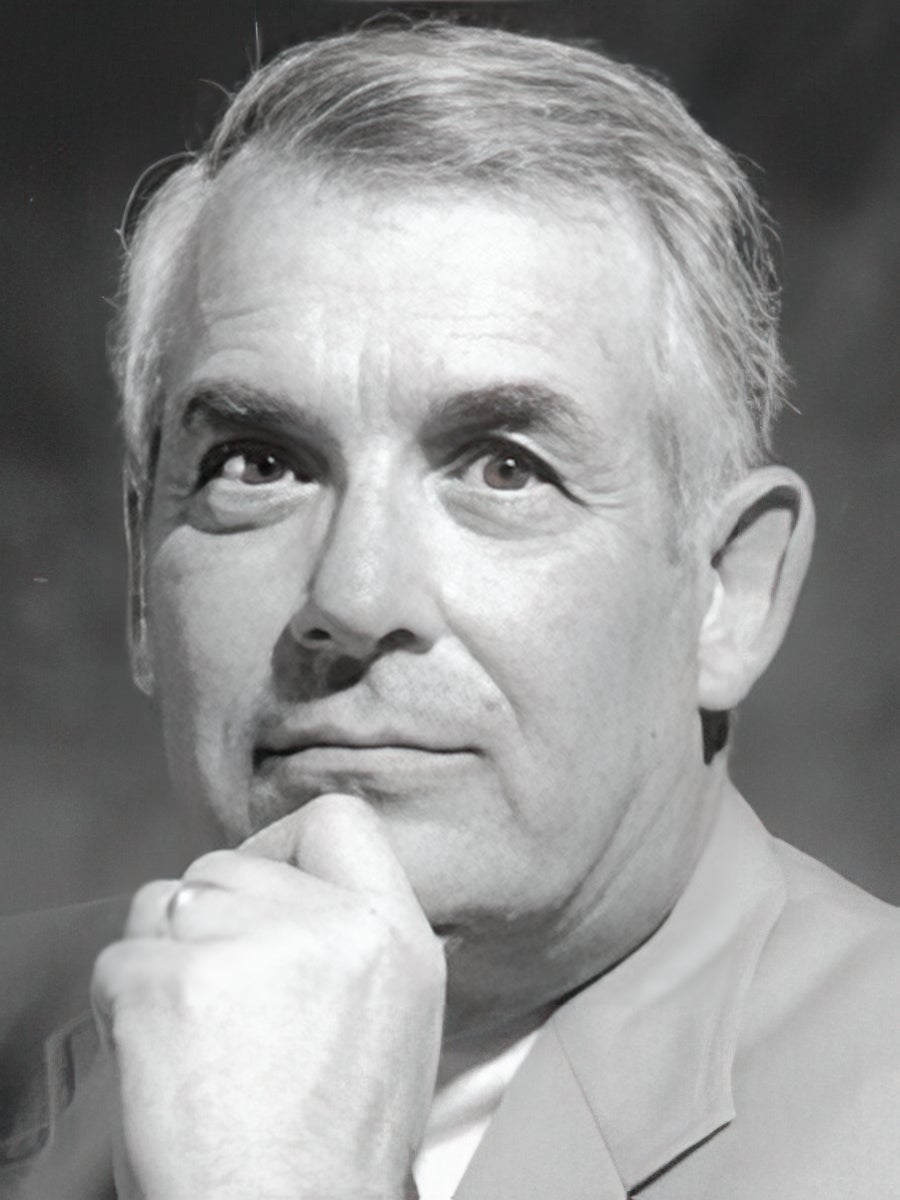
Richard L. Tucker
Ph.D., The University of Texas at Austin, 1963
M.S., The University of Texas at Austin, 1960
B.S., The University of Texas at Austin, 1958
Richard Tucker’s career has been wide-ranging. He has worked as a project engineer, administrator, teacher and researcher. In his career, he has blended academic research interests with construction industry data and his practical experience in the field. He was elected to the National Academy of Engineering in 1996 for developing management improvement practices in construction. Before his joining the faculty at UT Austin in 1976, he was a project engineer for Engineering Science Consultants in Austin, associate dean of engineering at The University of Texas at Arlington, and vice president for research at Luther Hill & Associates. He is currently a professor emeritus and holds the Joe C. Walter Jr. Chair in Engineering. An organizational leader, Tucker developed the annual Construction Project Improvement Conference, which has had international participation for more than two decades. He was a founding officer of the International Association for Automation and Robotics in Construction. In 1983, he led a group of major facility owners and engineering and construction contractors in establishing the Construction Industry Institute (CII) and served as its founding director until 1998. The CII is recognized as the world’s premier construction industry research consortium and is used as a model for organizations in other countries and in other industries. Tucker has served on the Executive Committee of the Building Research Board of the National Research Council and as chairman of the Technical Council on Research for ASCE. He was instrumental in establishing ASCE’s Civil Engineering Research Foundation. Among his numerous professional recognitions, he was the first recipient of the R.L. Peurifoy Award for Construction Research from ASCE in 1986. He has received the Ervin S. Perry Award, the Joe J. King Professional Engineering Achievement Award and the Hocott Distinguished Research Award from UT Austin, and was recognized as a Distinguished Engineering Graduate in 1994. He also was the first recipient of the Ronald Reagan Award for Individual Initiative from the Construction Industry Institute. In 1993, he received the Construction Engineering Educator Award from the National Society of Professional Engineers. He was recognized as Engineer of the Year by the Austin Chapter of TSPE in 2000 and as the State Engineer of the Year in 2002. He was elected to the National Academy of Engineering in 1996.