Environmental and Water Resources Engineering
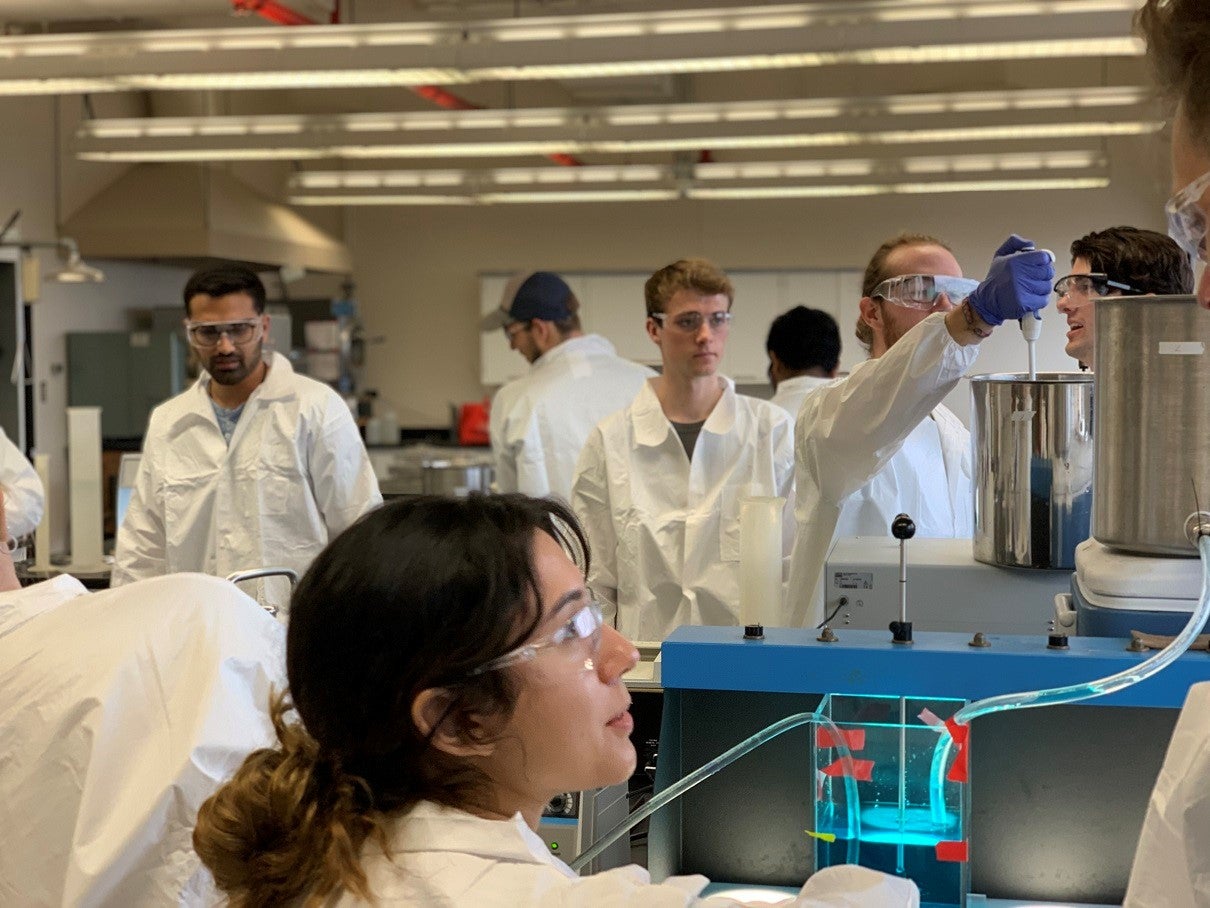
Texas CAEE’s environmental and water resources engineers are reimagining how humanity interacts with air, water and the planet itself. From designing nanomaterials that purify drinking water to modeling the effects of floods, droughts and pollution, our researchers lead innovations that make communities more resilient and sustainable.
Environmental and water resources engineering is a broad discipline dedicated to addressing environmental issues in air, water and soil. It includes a variety of sub-disciplines, such as water quality engineering, water resources engineering, outdoor and indoor air quality engineering, ocean engineering and hazardous waste management. Sustainable engineering concepts are integrated into these sub-disciplines, encompassing the long-term environmental, economic and social implications of engineering practice.
Here’s a glimpse of what environmental engineering students do at The University of Texas at Austin:
- Evaluate removal of pharmaceuticals and personal care products for direct potable reuse
- Model the impact of extreme events such as floods and droughts
- Design efficient propulsors to reduce greenhouse gas emissions from ships
- Design turbines to extract the energy of ocean currents
- Holistically evaluate “green” technologies via life-cycle assessment
- Remediate soil and ground waters impacted by unintended pollutant releases
- Design nanomaterials for treatment applications and assess their environmental impact
- Quantify human exposure to outdoor and indoor air pollutants
- Study judicious energy use in the distribution and treatment of water (water-energy nexus)
- Quantify the impact of the flow of water and its contaminants in rivers and coastal systems
- Design stormwater control facilities to improve surface water quality
- Design passive treatment systems to improve the air we breathe indoors
Resources
- Research Area Coordinator: Ben Hodges