2016 Academy of Distinguished Alumni
Eight alumni and one faculty member from the Department of Civil, Architectural and Environmental Engineering at The University of Texas at Austin have been elected to the Academy of Distinguished Alumni.

The department established the Academy of Distinguished Alumni to acknowledge the professional achievements and contributions of its graduates. Twenty-seven charter members were inducted into the academy in 2003, and 92 additional members have been selected since.
The 2016 honorees are recognized for expertise in their fields, research and education advancements and strong leadership qualities.
Active Membership
Valerie Briggs
M.S., The University of Texas at Austin, 2000
B.S., The University of Texas at Austin, 1997
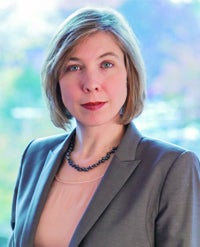
Valerie Briggs is a visionary leader who has worked on the cutting edge of transportation research and directed critical transitions in improving and modernizing transportation services in the United States. She brought to the nation’s attention the need for comprehensive collaboration and coordination of transportation operations programs and led large-scale efforts to successfully apply technology to enhance personal mobility, safety and transportation system performance.
As a graduate student supervised by Dr. Mike Walton, she saw the need for the transportation industry to better communicate across boundaries in order to serve the public better. She recognized and documented trends and, through committee work, helped lead a fundamental change in how state transportation agencies went beyond just management of construction and maintenance of roadways to operating multi-modal transportation systems.
As the first permanent program manager for operations at the American Association of State and Highway Transportation Officials (AASHTO), Briggs developed and oversaw new programs in transportation operations and security/emergency management. These concepts represented a fundamental change in how state transportation agencies manage and operate facilities in conjunction with other disciplines and government agencies. In the aftermath of 9/11 and Hurricanes Katrina and Rita, numerous states saw firsthand the need to start or expand their own activities in transportation operations and security and relied on the AASHTO programs that Briggs oversaw to help make this happen. She also led another transformative change across the industry—the development of vehicle-to-vehicle and vehicle-to-infrastructure communications capabilities as part of USDOT’s Intelligent Transportation Systems Joint Program Office. She helped implement these systems while protecting user privacy and security. In her current role as director of training for the Federal Highway Administration’s National Highway Institute (NHI), she currently provides technical training to the nation’s highway transportation workforce to build skills and enhance job performance. NHI trains over 40,000 professionals per year on topics that lead to improved conditions and safety of our nation’s roads, highways and bridges.
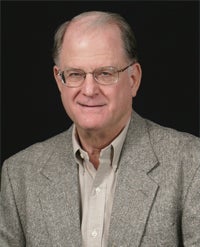
J. Crozier Brown
M.S., The University of Texas at Austin, 1967
B.S., The University of Texas at Austin, 1965
Crozier Brown has been a leader and early adopter of information technology in the search for civil and petroleum engineering solutions. When Global Positioning Systems (GPS), Geographic Information Systems (GIS) and satellite imagery were new technologies, he was an early adapter who learned how to apply these tools to the engineering discipline, demonstrating their value and guiding users. Born in Waco, Texas, Brown came to The University of Texas at Austin after graduating high school. He says that his college education provided a broad foundation on which he built several careers: consulting engineer, research engineer, private consultant, and entrepreneur. He feels that his greatest professional accomplishment was the ability to successfully move between diverse industries and multiple disciplines, as well as witnessing civil engineering projects in motion.
After joining Atlantic Richfield in the late 1970s, Brown pioneered the marriage of computers to airborne remote sensing, data automation and both surface and subsurface data storage and analysis. In this role, he managed the development and implementation of GIS for the company’s research lab of nearly 500 professionals. He also designed and managed the development and implementation of a geologic “living map” of the North Slope of Alaska consisting of maps of several hundred components. For over 25 years, he led his own company, J. Crozier Brown and Associates, and served small and mid-sized engineering offices as a consultant in information technology. As a consulting engineer, he applied IT to the construction industry. He co-authored the computer software used to design the drainage system for the 18,000-acre Dallas-Fort Worth International Airport. Brown has been an active leader and contributor to the American Society of Civil Engineers at the local Dallas branch and section levels, as well as the ASCE National Technical Council on Computer Practices. As an ASCE Fellow, he has served in many committee leadership roles where policies and procedures were developed for the use of computers in the civil engineering profession.
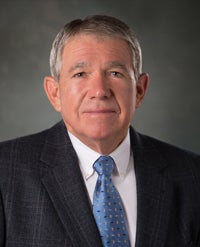
Dewayne E. Hahn
M.S., The University of Texas at Austin, 1974
B.S., The University of Texas at Austin, 1973
Dewayne Hahn has been responsible for the construction of unique projects that incorporate engineering elements to withstand earthquakes, terrorist blasts, large spans and exacting tolerances. He was an early adopter of technology on the job site and implemented LEAN construction techniques in some of the earliest applications in the United States. Upon graduating with a master’s degree in 1974, he began his career at Linbeck Construction Corporation and continues to work for Linbeck some 42 years later.
At 30 years old, Dewayne recalls being assigned to be the project manager on a 55-story, 1.2 million square foot office tower with a 16-story garage and connecting tunnel. He says, “Mr. Linbeck placed a huge amount of trust in my ability, and it was extremely motivating.” Over the course of his career, Dewayne has served in numerous roles at Linbeck and two sister companies that are engaged in masonry and concrete structures. His current assignment is project executive for some of Linbeck’s most complex projects, and he also serves as a mentor during difficult projects. Throughout the years, Dewayne has embraced technological advances in construction engineering that have drastically changed the job site and streamlined information sharing. He also continued his learning at the Executive Program for Growing Companies at Stanford University. He has also taught many superintendent and project management classes for the Associated General Contractors of America and served on the CAEE Department’s External Advisory Committee. Dewayne has assisted numerous non-profit associations’ building projects that have very limited budgets and has been involved in hurricane and tropical storm recovery efforts. An advisor to young engineers and project managers, he also allows our graduate students to conduct research studies on Linbeck construction projects.
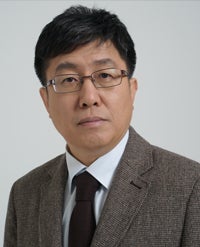
Moo Young Han
Ph.D., The University of Texas at Austin, 1989
M.S., Seoul National University 1979
B.S., Seoul National University, 1977
Otherwise known as Dr. Rain, Professor Moo Young Han is leading the “rainwater revolution.” A professor at Seoul National University, he is recognized for his creative, innovative work on dissolved air flotation and rainwater harvesting. He shares his knowledge with the public and helps underserved communities gain access to clean water. At the beginning of his academic career, Moo Young worked on dissolved air flotation, a process that removes particles from water by attaching air bubbles to them, making them denser than water. He became a recognized expert in this area but also had a growing interest in rainwater harvesting.
Living in Seoul, Moo Young experienced frequent flooding due to substantial rainfall and a high percentage of impervious cover. He became convinced that the longstanding engineering approach to preventing flooding was fundamentally flawed. Rather than building sufficiently large piping networks to quickly carry water downstream of cities, he concluded that rain should be captured and used where it falls. As a result, he first worked on “rainwater harvesting,” a process where rainwater is captured from rooftops, and collected for beneficial use, such as gardening, toilet flushing or treating drinking water. He also worked with local politicians to change building practices so that new apartment and office buildings in Seoul are required to capture, store and use rainwater. Similar laws have been adopted by several major cities in Korea. He also took this technology to many rural places in developing countries in Asia, creating clean drinking water for countries that had never had it before. Moo Young has organized several international conferences on rainwater harvesting and has received multiple awards from the International Water Association (IWA), the leading global water and wastewater organization of professionals. As a response to growing water problems due to climate change, he also initiated a rainwater harvesting and management specialist group through the IWA.
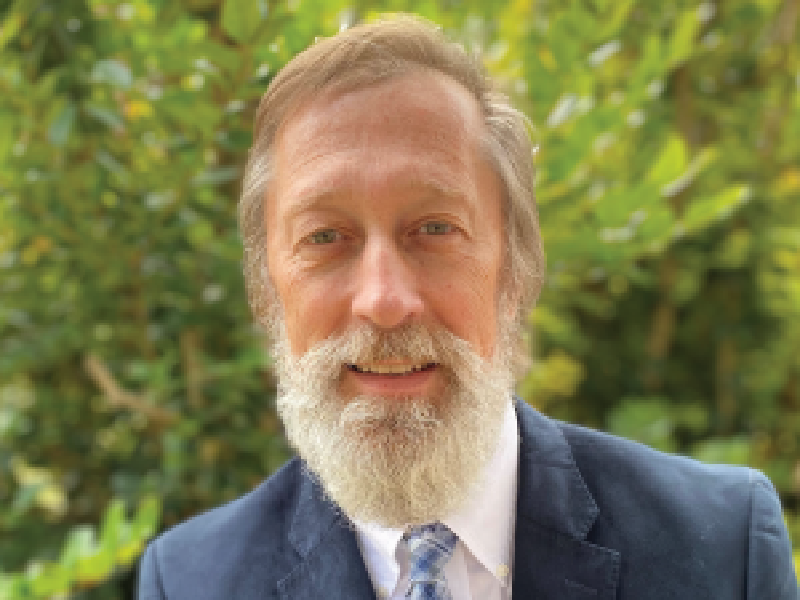
Todd Helwig
Ph.D., The University of Texas at Austin, 1994
M.S., The University of Texas at Austin, 1989
B.S., The University of Texas at Austin, 1987
Professor Todd Helwig is an international expert on the stability aspects of bridge construction, focusing on the design and behavior of steel structures. He is a talented, hands-on researcher and teacher who trains his students to become outstanding engineers and creates practical solutions for practicing engineers. His ability to educate others on the applied technology that comprises the built environment is exemplary. Todd joined the faculty at The University of Texas at Austin in 2005 after excelling on the faculty at the University of Houston. His research has had a broad focus, including studies involving full-scale laboratory testing, field monitoring of bridges under construction and parametric FEA studies. He has also carried out studies on prestressed concrete and elastomeric bearings for high-demand bridge applications.
Todd has also been active in developing and teaching continuing education short courses on the design and behavior of building and bridge systems. Over the last 20+ years, over 5,000 engineers have attended his short courses. Most of the material for these courses is derived directly from his own research program. Many of his novel solutions and recommendations have been implemented by TxDOT, and Todd has been active on several technical committees within the American Society of Civil Engineers, the American Institute of Steel Construction, the Transportation Research Board, the AASHTO Steel Bridge Task Force and the Structural Stability Research Council. His research has been recognized with several awards, including the ASCE Collingwood Research Prize, the ASCE Moisseiff Award and the ASCE Shortridge Hardesty Award. Todd’s work on stability bracing systems in steel bridges was recognized at the North American Steel Construction Conference with a Special Achievement Award. He was also recently selected as the recipient of the 2017 T. R. Higgins Lectureship Award from AISC.
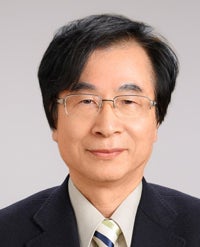
Kyuichi Maruyama
Ph.D., The University of Texas at Austin, 1979
M.E., University of Tokyo, 1974
B.E., University of Tokyo, 1972
Kyuichi Maruyama has made tremendous contributions to Japan’s civil engineering sector in the fields of design, construction and maintenance management of concrete structures. He is an expert on the seismic design of concrete structures and has conducted pioneering research into continuous fiber-reinforced concrete structures. A professor emeritus at Nagaoka University of Technology, he taught for more than 35 years and also served as the university’s executive director and vice president. Kyuichi fondly remembers his time at UT Austin from 1975-79, when he studied and researched with Dr. James Jirsa, a mentor who he feels had the greatest impact on his career.
After returning home to Japan, he was hired at the newly established Nagaoka University of Technology and helped design a new research building similar to UT’s Ferguson Structural Engineering Lab. Until his retirement, his 35 years of research activities have resulted in many contributions to government agencies, including the development of guidelines and field examination of actual structures for determining effective countermeasures. Kyuichi has been an active member of both the Japan Concrete Institute (JCI) and the Japan Society of Civil Engineers (JSCE). He served as chairman of the JSCE code revision committee, and after five years of revision, the new code was published in 2012. He considers this one of his greatest professional accomplishments. Kyuichi also played a key role in the study of earthquake and tsunami damage caused by the 2011 East Japan Earthquake and in the recovery work following the event.
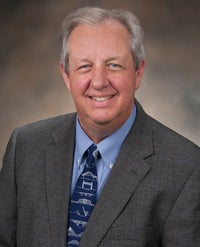
Gregg A. Reese
M.S., The University of Texas at Austin, 1983
B.S., The University of Texas at Austin, 1980
Gregg Reese is a leader in the design of advanced bridges and has developed many novel methods for the design and erection of various types of bridges. Among his peers, he is known for not fearing challenges. Over a 35-year career, he has been involved in the design and construction of numerous concrete bridges in North America. After saving money, working as a draftsman for a large engineering firm in the daytime, and studying engineering at night school for two and a half years, Gregg came to UT Austin as a junior and decided to focus on structural engineering, having no idea what was in front of him. He says the next five years were some of the best of his life.
After finishing his bachelor’s, he was offered a spot as a research assistant at Ferguson Lab, where he learned from many of the field’s giants how to be an engineer. In 1995, he started his own successful company, Colorado-based Summit Engineering, and went on to design the first curved, precast concrete tub girder bridge in the U.S. His consulting firm has performed a wide variety of services, including the design of new bridges and temporary works, erection engineering during construction and the repair and demolition of numerous existing bridges. Many projects have won design awards for advancements and innovation in the design and construction of complex, precast concrete bridges. Gregg was also responsible for making sure that the 40-story center support arch of the Dallas Margaret Hunt Hill Bridge was able to be successfully erected and stabilized for subsequent construction of the superstructure. This type of extremely complex undertaking is what Gregg thrives on. He is currently a member of PTI, ASBI, ASCE, ACI and PCI and is a fourth-generation Texas and Houstonian who has lived in Colorado for over 20 years.
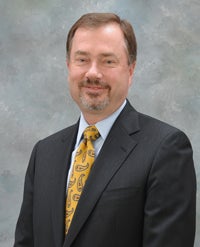
Glenn J. Rix
Ph.D., The University of Texas at Austin, 1988
M.S., The University of Texas at Austin, 1984
B.S., Purdue University, 1982
Glenn Rix has had two very successful careers: he is a highly regarded teacher and researcher at Georgia Tech and a leading geotechnical earthquake engineering consultant at Geosyntec. He has also distinguished himself as an active member of the National Science Foundation’s Geotechnical Extreme Events Reconnaissance (GEER) Association, the pre-eminent organization in the world coordinating geotechnical investigations after extreme events, such as earthquakes and floods. At UT Austin, he was supervised by Kenneth Stokoe. Rix considers Stokoe to have had the most significant impact on his career as an advisor, teacher, mentor and friend for nearly 35 years.
Following graduation, Rix was a faculty member at the Georgia Institute of Technology for over two decades. During that time, he helped educate more than 2,500 undergraduate and graduate students, led numerous research projects, and was active in professional service, including serving as department chair. He is most proud of having the opportunity to teach so many students, many of whom are now working in academia or practice. After a 24-year career in academia, Rix joined Geosyntec Consultants in 2013 as Senior Principal. His practice includes seismic hazard assessment and mitigation for civil infrastructure, including dams, power plants, ports and harbors, as well as advanced near-surface geophysics investigations and interpretations across a range of applications. Rix quickly established himself as a leading geotechnical earthquake engineering consultant to government and industry in the eastern and central U.S. He was recently appointed to a three-year term on the Advisory Committee on Earthquake Hazards Reduction (ACEHR), one of the more prestigious appointments for an earthquake engineer, scientist, or policy analyst.
Honorary Membership
Dan L. Wheat
Ph.D., Colorado State University, 1980
M.S., University of Denver, 1973
B.S., University of Colorado, Boulder, 1969
A skilled professor and researcher in structural analysis and wood structural design and a dedicated and caring undergraduate advisor, Dan Wheat provided high-quality service that contributed to this department’s success for 35 years. He made numerous contributions to the area of behavior and design of wood structures, helped countless students succeed at UT Austin, and keenly introduced students and families to our department for the first time. Wheat’s years at UT Austin were filled with four disparate, sometimes overlapping experiences like floor and shoring research tests, computation related to nonlinear structural behavior and piezoelectric behavior of wood, field studies and undergraduate advising. Arriving at The University of Texas at Austin in 1980, his primary research interests were in the modeling and testing of light-frame wood structures, and through work mostly at the Ferguson Structural Engineering Laboratory, where he developed one of the largest depositories on the empirical behavior of light-frame parallel-member floor, wall and roof systems Wheat served as the department’s undergraduate advisor from 1996 to 2015 while continuing to teach classes and conduct research.
He maintained a strong, close relationship with the Texas Department of Insurance’s Windstorm Inspection Program, serving on committees, presenting short courses and traveling on field investigations for Hurricanes Claudette, Rita and Ike. Wheat helped countless students connect with their own resilience and self-confidence and develop strategies to improve academically; Wheat often went “beyond the call of duty” to help them successfully complete their undergraduate degrees. He is proud of his time as an undergraduate advisor, especially the personal communication with those undergraduate students who struggled but are now members of the profession.
“Members of the CAEE Academy of Distinguished Alumni have each had a profound and positive impact on the world we live in,” said Department Chair Richard Corsi. “They do much to help our students, not the least of which is to inspire them to do great things themselves. We are fortunate to have such a distinguished group of alumni, and the Class of 2016 adds to the impressive and multi-dimensional accomplishments of the Academy.”